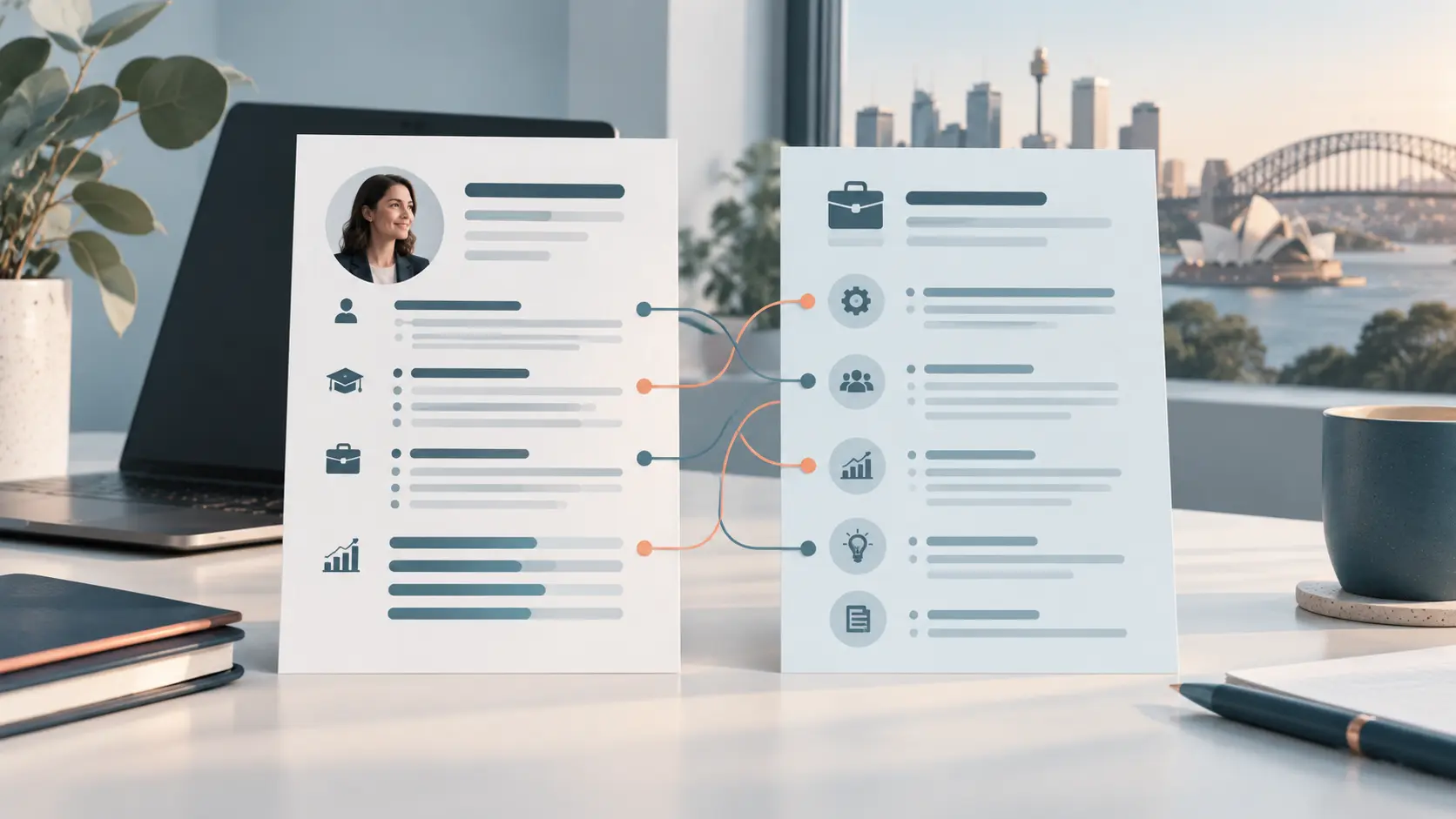
Cover letters are difficult to write when you begin with a blank page. Many candidates fall back on generic statements that could be sent to almost any employer.
A better approach is to start with the vacancy itself. Identify what matters to the employer, select the strongest evidence from your background and build the letter around those connections.
Why Generic Cover Letters Fail
A generic cover letter often spends several paragraphs telling an employer that the candidate is enthusiastic, hardworking and interested in the opportunity.
Those statements are not necessarily wrong, but they do not answer the employer's most important question: why is this candidate relevant to this job?
Analyse the Job Description First
Before writing your opening sentence, identify three or four requirements that appear particularly important.
These might include:
- technical capabilities;
- industry experience;
- stakeholder responsibilities;
- leadership expectations;
- software or systems;
- customer-facing responsibilities.
Choose the Most Relevant Experience
Your cover letter does not need to describe every role on your CV. Select examples that make the strongest case for this particular position.
For example, if a vacancy emphasises supplier coordination and procurement systems, a paragraph about those responsibilities is more useful than a detailed description of unrelated duties.
Write a Strong Opening Paragraph
Your opening should identify the role and establish relevant professional context quickly.
A useful opening may briefly state your professional field, relevant experience and why that experience aligns with the position.
Show Evidence Instead of Repeating Your CV
Your CV tells the employer what you have done. Your cover letter should explain why selected parts of that experience matter to this role.
Rather than reproducing three CV bullets, choose one or two examples and connect them to the employer's priorities.
Connect Your Experience to Employer Requirements
Strong cover-letter paragraphs create a clear connection:
If the employer needs someone who can coordinate complex stakeholders, explain where you have done that and which groups you worked with.
If the employer needs a specific technical capability, explain how you have applied it rather than merely repeating the name of the skill.
Avoid Generic Cover Letter Language
Phrases such as "I am a passionate professional with a proven track record" use valuable space without providing much evidence.
Prefer concrete information:
- what you worked on;
- which environments you worked in;
- which systems you used;
- what you coordinated;
- what you delivered.
How Long Should a Cover Letter Be?
A cover letter should normally be concise enough that a recruiter can read it without unnecessary repetition. Focus on the strongest evidence rather than trying to cover your entire employment history.
Clear paragraphs and purposeful writing are more important than reaching an arbitrary word count.
Can an AI Cover Letter Generator Help?
An AI cover letter generator can help compare your experience with a vacancy and create a useful first draft.
The same accuracy rule that applies to AI-generated CVs should apply here: the system should not invent achievements, responsibilities or qualifications simply to create a stronger narrative.
The most useful AI-generated cover letter is one grounded in both the candidate's original CV and the actual job description.
Final Cover Letter Checklist
- Use the correct job title and employer name.
- Identify the employer's most important requirements.
- Select two or three strong examples from your background.
- Connect your examples directly to the role.
- Avoid repeating your entire CV.
- Remove generic filler.
- Check every factual claim.
- Proofread spelling and grammar.
- Use a professional closing.
Your cover letter will also be stronger when the accompanying CV has been tailored to the same job description .
Generate a Job-Specific Cover Letter
Qolified uses your CV and target job description to create a tailored cover letter alongside your CV and skills gap analysis.
Create My Application →